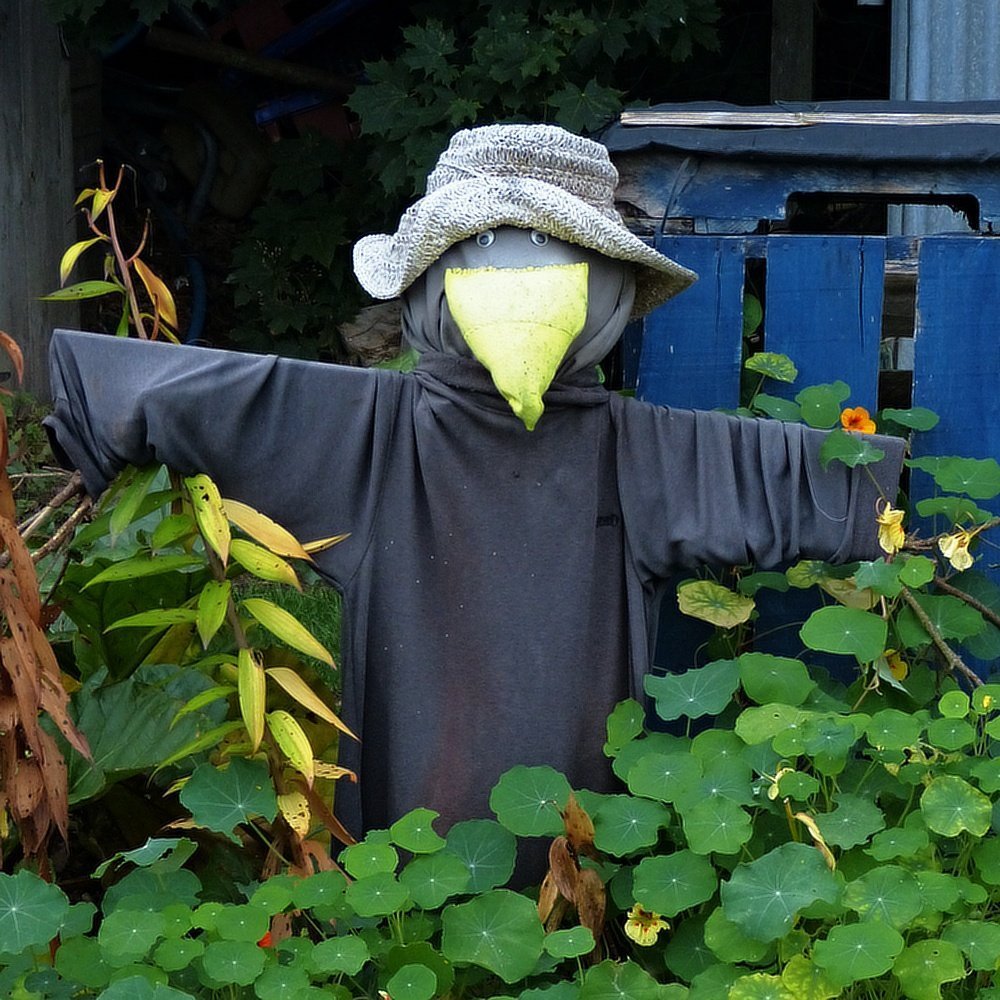
Spot the community assets.
I get the impression that allotments are, to some, curious things. More left-overs from a different era than anything much to do with the modern world. But for others they remain a valuable part of life today. These days I’m very much of the latter view (and I help out with an allotment). Once, I think I’d have classed them as the territory of ‘old geezers’.
In Caversham there are several allotment sites. Sadly, the Henley Road one (accessed via Chiltern Road) is under threat – Reading Council has their eye on it as somewhere where they can expand the cemetery. Whether they do so or not will have to be squared with the legislation though – councils have a legal duty to provide sufficient allotments. (And surely there’s some irony in swapping land devoted to the living to land devoted to the dead.)
You can start your exploration of the legal side of things here if you’re interested.
The history of allotments goes back centuries – you can sum it up by saying they arose as ways of keeping the the poor fed, particularly after the rich grabbed the common land. But since those early Medieval beginnings, naturally, there have been plenty of developments which continue today.
These days, a lot of interest is coming from people who want to ‘grow their own’, both for pleasure and for the better quality of produce you get to eat. It’s also a decent way to get outside and do something useful while you’re there. Add the ever-increasing number of people who are keen to grow their own food but can’t afford a house or flat of their own. Add those who only have a very small garden. Add people who want somewhere where their children can learn about food while they’re busy growing it. All in all, there are plenty of different reasons why people today have an allotment – and I’m sure there are others I’ve forgotten to mention.
None of which mentions the types of people who are getting involved. Overall, there’s a broad age range amongst the allotment holders, it’s certainly not old geezer- (nor old biddy-)land. And there a broad range of nationalities too. Overall, in my experience at least, there’s a good sense of friendship and mutual help. Put all that in the pot and you have ingredients for a healthy community – and one that expands far beyond the actual allotment sites.
Now, it must also be said that having an allotment is time-consuming. Don’t fool yourself in this regard. But if you fancy one I don’t think they are that expensive to rent. (There are details on the council’s site, you have to hunt down the page a bit.)
However, do be aware that there’s a waiting-list. This varies according to the site – there are details on the Reading Council site. (Again, you’ll have to scroll down a bit.)
For good reasons or bad, the number of allotments available throughout the country, not just locally, has fallen hugely since the middle of the last century. Don’t let that put you off though: as mentioned above, the more demand there is, the more pressure there is on councils to provide.
When all’s said and done, and whether or not you’re a keen gardener let alone an allotment owner, the next time you pass an allotment site do pause to appreciate it. It’s an often purposefully ramshackle place that holds a wide variety of treasures – not least the people you’ll find working there, people from all sorts of backgrounds and cultures.